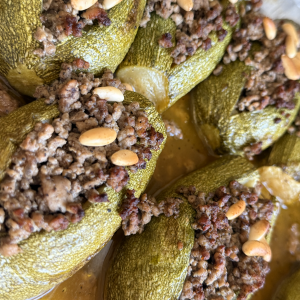
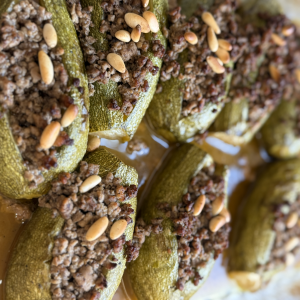
Ablama is a traditional Lebanese dish made from baby zucchini (Koussa) that are hollowed out and stuffed with a mixture of ground meat, rice, spices, and pine nuts. The stuffed zucchini are then gently cooked in a flavorful tangy sauce. Served with rice & vermicelli.
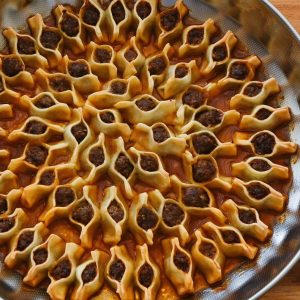
Armenian manti is one of those dishes that wins people over instantly — even if you’ve never heard of it. It’s comforting, elegant, and deeply nostalgic for anyone from the Mediterranean, . And for us in the U.S., it feels both exotic and familiar at the same time.
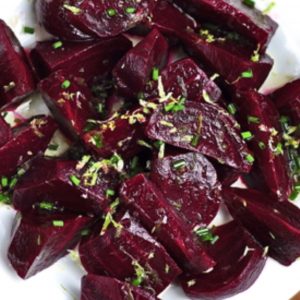
Lebanese beet salad is a vibrant, earthy, and refreshing dish that celebrates the natural sweetness of beets while layering in bold Middle Eastern flavors. It’s delicious because it balances sweet, tangy, and herbal notes with a satisfying texture and visual appeal. *** Servings: 2 People ***
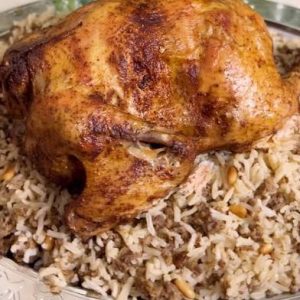
chicken stuffed with rice, it’s one of the crown jewels of Lebanese hospitality cuisine. It’s not just a dish—it’s a celebration on a platter. Think of it as the Lebanese answer to a roast turkey, but with way more spice, soul, and flavor.
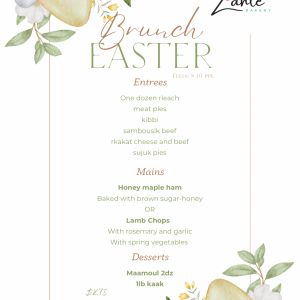
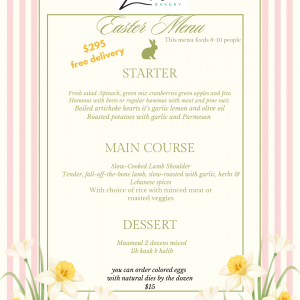
Easter brunch is one one of the most cherished family gatherings of spring — a moment to slow down, share a generous table, and enjoy the Lebanese dishes. In many Lebanese homes, this holiday isn’t just about celebration; it’s about reconnecting, cooking with love, and passing down flavors that have been part of family stories for generations. Our Easter brunch…
A springtime feast built around togetherness, generous flavors, and the comforting dishes that bring Lebanese families back to the table year after year. This menu blends fresh seasonal ingredients with the classics everyone loves — a celebration of food, warmth, and shared moments.
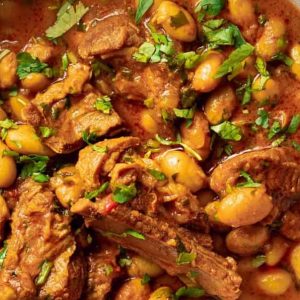
Lebanese fasoulia — beans simmered with beef bones — is one of the most comforting, deeply flavored home dishes in the entire cuisine. It’s simple, rustic, and slow‑cooked, but the flavor is unbelievably rich. It’s the kind of meal families make in big pots, especially in winter or during Ramadan, because it fills the house with warmth and the stomach…
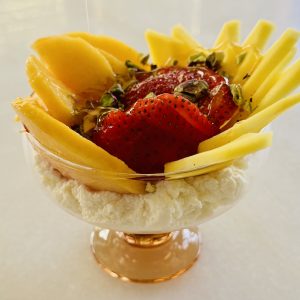
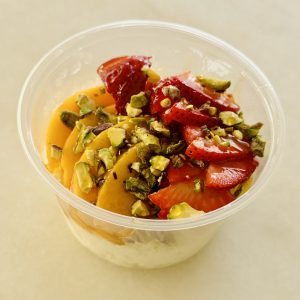
Treat yourself to a rich layer of authentic Lebanese Ashta—a silky cream delicately infused with orange blossom water. On top, we layer vibrant slices of fresh seasonal fruits creating a colorful crown of natural sweetness. A final drizzle of golden honey and a sprinkle of crushed pistachios add the perfect finishing touch. Servings: 2 People
Lebanese Hindbeh salad—also known as Hindbeh bi Zeit—is a beloved vegan mezze made from dandelion greens (or chicory) sautéed or boiled, then dressed with lemon juice, olive oil, and topped with caramelized onions. It’s earthy, tangy, and deeply satisfying. *** Servings: 2 People ***
The word “gyro” (pronounced yee-roh) means “turn” referring to the traditional method of cooking meat on a vertical rotisserie. At home, gyros are made by roasting marinated meat and assembling the wrap fresh. With Homemade versions we control quality and seasoning. *** Servings 5 People ***
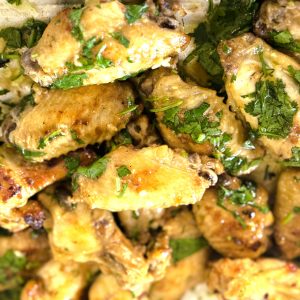
Lebanese chicken wings—known as Jawaneh—are a flavor-packed celebration of spice, citrus, and tenderness. They’re not just delicious… they’re irresistible. Here's why they hit so hard on the taste scale: Jawaneh are oven-baked or grilled chicken wings marinated in a bold blend of Middle Eastern spices, lemon juice, yogurt, and garlic. Unlike deep-fried wings, these are roasted until the skin crisps…
Lebanese chicken wings—known as Jawaneh—are a flavor-packed celebration of spice, citrus, and tenderness. They’re not just delicious… they’re irresistible. Here's why they hit so hard on the taste scale: Jawaneh are oven-baked or grilled chicken wings marinated in a bold blend of Middle Eastern spices, lemon juice, yogurt, and garlic. Unlike deep-fried wings, these are roasted until the skin crisps…